Companies understand financial debt. It appears on the balance sheet. It carries a cost. It can constrain future decisions. But organizations can accumulate another form of liability that rarely appears in financial statements: Governance debt. Governance debt...
Insights on Governing Global Growth
These brief articles explore the leadership, governance, and operational disciplines required to scale globally without losing control. Drawing on three decades of experience in aerospace, defense, and international business expansion, Dr. Raymond A. Hopkins provides practical frameworks leaders can apply when growth begins to outpace organizational capacity.
Author of the forthcoming book Governing Growth: How Smart Companies Scale Globally Without Losing Control.
Why Standardization Is Not Bureaucracy—It’s Strategic Capacity
Standardization has a reputation problem. In many organizations, the word suggests bureaucracy. More rules. More procedures. More approvals. Less flexibility. That perception is understandable. Poorly designed standardization can create all of those things. But...
The Decision Rights Problem No One Fixes Early Enough
Most organizations entering new markets spend considerable time discussing strategy. They analyze market potential. They evaluate competitors. They assess demand forecasts. They develop entry plans. What they rarely discuss with the same level of rigor is a question...
When Growth Outruns Governance
Growth is usually celebrated for what it creates. More customers. More revenue. More markets. More employees. More opportunity. But growth also creates something less visible: more things that must be governed. That is where many organizations encounter trouble. The...
The First Sign Your Operating Model Is Beginning to Crack
Operating models rarely fail all at once. They begin to crack quietly. A decision that used to take a day now takes a week. A local team starts working around a corporate process because the process no longer fits the market. An executive makes an exception “just this...
Complexity Doesn’t Arrive Overnight — It Accumulates Quietly
Global growth rarely fails because leaders make one catastrophic decision. More often, complexity builds slowly. A new country is added.A local partner is selected.A regional exception is approved.A reporting requirement is created.A process is adjusted “just for...
Why the Best Expansion Strategies Look Boring
For many leaders, international expansion is associated with bold moves. A new country.A new market.A major acquisition.A dramatic announcement. The headlines usually celebrate the visible moments of expansion. They rarely highlight the less exciting work that...
How Smart Companies Build Global Capability Before They Need It
One of the greatest misconceptions about international expansion is that organizations should build capability as they grow. It sounds logical. Enter a new market. Learn from experience. Adapt as challenges emerge. While experience is certainly valuable, relying on...
The Silent Tax of International Growth
Every organization expects international expansion to come with additional costs. Tariffs. Shipping. Compliance. Legal fees. Currency fluctuations. These costs are visible. They appear in budgets, financial forecasts, and management reports. Yet one of the largest...
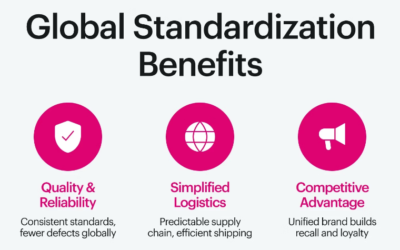
When Standardization Creates Competitive Advantage
Few words generate more debate in global organizations than standardization. For some leaders, it represents discipline, consistency, and efficiency. For others, it suggests bureaucracy, rigidity, and a lack of responsiveness to local markets. Both perspectives miss...

Dr. Raymond A. Hopkins
Author / Global Business Consultant
Thank you for reading! Enjoyed this post? Dive deeper into insights and resources across my site at https://drraymondhopkins.com/