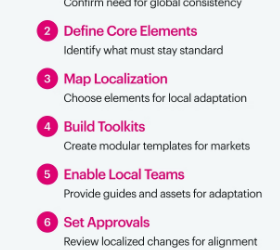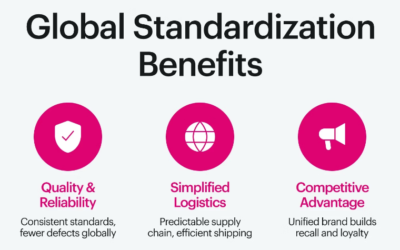
Few words generate more debate in global organizations than standardization. For some leaders, it represents discipline, consistency, and efficiency. For others, it suggests bureaucracy, rigidity, and a lack of responsiveness to local markets. Both perspectives miss...
Insights on Governing Global Growth
These brief articles explore the leadership, governance, and operational disciplines required to scale internationally without losing control. Drawing on three decades of experience in global aerospace, defense, and international business expansion, Dr. Raymond A. Hopkins provides practical frameworks leaders can apply when growth begins to outpace organizational structure.
Author of the forthcoming book Governing Growth: How Leaders Preserve Control While Scaling Globally.
What Great Global Operating Models Have in Common
Successful global companies compete in different industries, serve different customers, and pursue different strategies. Some manufacture products. Others deliver services. Some grow through acquisitions. Others expand organically. Yet despite these differences, the...
The Leadership Capacity Problem Behind Global Growth
When organizations plan for international expansion, they typically focus on tangible resources. Capital. Technology. Manufacturing capacity. Supply chains. Market demand. These are all important. Yet one of the most critical factors in successful global growth is...
Why Global Companies Need Fewer Decisions—Not Faster Ones
One of the most common goals in global organizations is to make decisions faster. Executives encourage quicker approvals. Technology promises real-time information. Leadership teams search for ways to accelerate execution. Speed certainly matters. But speed alone does...
The Hidden Cost of Organizational Complexity
Growth is almost always viewed as a sign of progress. More customers. More employees. More markets. More revenue. These are the milestones organizations strive to achieve. But every stage of growth introduces something less visible: Complexity. Unlike revenue,...
Designing Global Expansion That Survives Success
Most organizations devote significant attention to planning for international expansion. They study markets. They evaluate competitors. They develop financial projections. They assemble launch teams. In other words, they prepare to enter new markets. What many do not...
Where Global Expansion Actually Breaks First
When an international expansion struggles, the explanation usually points outward. The market wasn't ready. Competition was stronger than expected. Regulations changed. Economic conditions shifted. These factors certainly influence performance. But they are rarely...
The Global Expansion Assumption That Costs Companies Millions
Every global expansion begins with assumptions. Some are grounded in careful research. Others are based on past success. One assumption, however, quietly undermines more international expansion efforts than almost any other: "If we're successful at home, we'll be...
The Country You Should Enter Second Matters More Than the One You Enter First
Ask most executives about international expansion, and the conversation quickly turns to one question: Which country should we enter first? It's an important question. But it may not be the most important one. In fact, many global expansion successes and failures are...
Scaling Without Structure: The Fastest Way to Stall Growth
Growth is exciting. Revenue increases. New customers arrive. Additional markets open. Teams expand. From the outside, success appears obvious. Inside the organization, however, a different reality may be emerging. As growth accelerates, complexity accelerates with it....

Dr. Raymond A. Hopkins
Author / Global Business Consultant
Thank you for reading! Enjoyed this post? Dive deeper into insights and resources across my site at https://drraymondhopkins.com/