
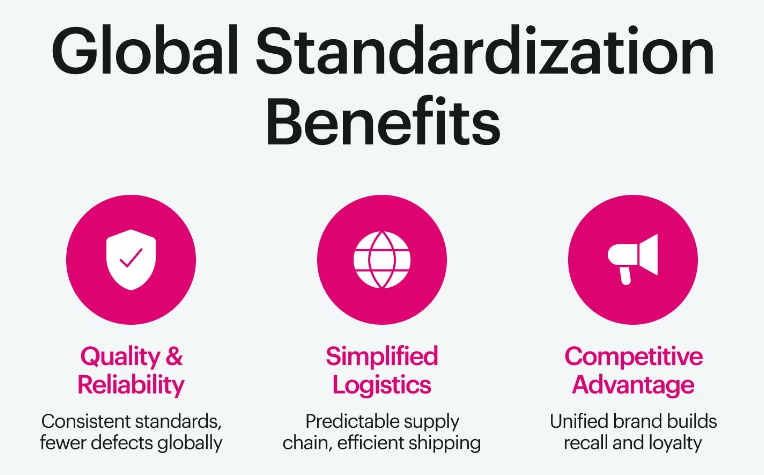
Few words generate more debate in global organizations than standardization.
For some leaders, it represents discipline, consistency, and efficiency.
For others, it suggests bureaucracy, rigidity, and a lack of responsiveness to local markets.
Both perspectives miss an important point.
The real question is not whether an organization should standardize.
It is what should be standardized—and why.
The world’s most successful global companies understand that competitive advantage is created not by making every market identical, but by ensuring that the activities most critical to enterprise performance are executed consistently.
Done well, standardization doesn’t limit growth.
It enables it.
Growth Increases Variation
As organizations expand internationally, variation naturally increases.
Markets develop their own practices.
Teams solve problems differently.
Technology platforms evolve independently.
Reporting methods change.
Local adaptations accumulate over time.
Some variation is healthy. It reflects customer needs, regulatory differences, and cultural expectations.
But when every market develops its own way of operating, the organization becomes increasingly difficult to manage.
Complexity rises.
Coordination slows.
Visibility declines.
Eventually, growth begins to work against the business rather than for it.
Standardize What Builds Scale
The strongest operating models distinguish between activities that should remain consistent everywhere and those that should adapt locally.
Enterprise-wide consistency is particularly valuable in areas such as:
- Financial reporting
- Performance measurement
- Decision rights
- Risk management
- Compliance processes
- Data definitions
- Cybersecurity standards
These are not areas where inconsistency creates competitive advantage.
They are areas where consistency creates confidence.
Standardization reduces uncertainty, improves visibility, and allows leaders to compare performance across markets with greater accuracy.
Local Flexibility Still Matters
Not everything should be standardized.
Customer preferences vary.
Sales approaches differ.
Marketing messages must reflect local culture.
Distribution channels change from one country to another.
Successful organizations recognize that competitive advantage often comes from adapting customer-facing activities while maintaining a common enterprise foundation.
This balance creates both agility and control.
Why Standardization Improves Speed
Many leaders worry that standardization slows decision-making.
In practice, the opposite is often true.
When operating principles are clear, teams spend less time debating how work should be done.
Routine decisions no longer require executive attention.
Processes become repeatable.
Knowledge transfers more easily across markets.
Instead of creating bureaucracy, thoughtful standardization removes unnecessary friction.
It allows people to focus their energy on solving customer problems rather than reinventing internal processes.
A Leadership Responsibility
Standardization is not an operational exercise.
It is a leadership decision.
Executives should continually ask:
- Which activities truly differentiate us in the marketplace?
- Which activities should look the same everywhere we operate?
- Where does local flexibility create value?
- Where does inconsistency create unnecessary risk?
The answers shape the organization’s ability to scale without losing effectiveness.
The Bottom Line
Competitive advantage does not come from standardizing everything.
Nor does it come from allowing every market to operate independently.
It comes from making deliberate choices.
Great global organizations standardize the systems that strengthen the enterprise while empowering local teams to adapt where customers expect it.
That balance creates faster execution, better visibility, stronger accountability, and greater resilience.
Markets may reward innovation.
But sustainable global growth depends on consistency in the areas that matter most.
When organizations standardize with purpose, they do far more than reduce complexity.
They create a competitive advantage that becomes stronger with every new market they enter.