
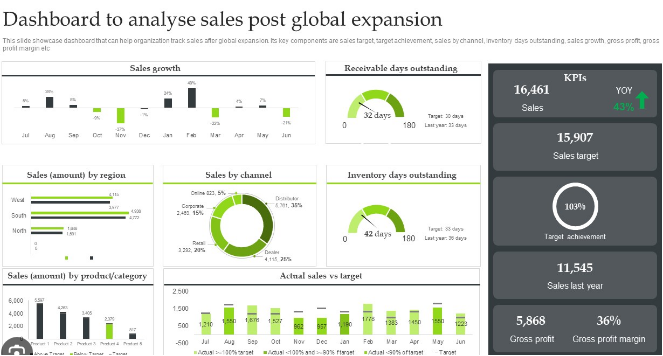
Most boards receive reports on global expansion.
Revenue growth.
Market penetration.
Sales forecasts.
Customer acquisition.
All important metrics.
Yet many expansion challenges emerge despite positive reports.
Why?
Because boards often measure outcomes rather than the systems producing those outcomes.
A company can report strong growth while governance weakens, margins erode, visibility declines, and execution becomes increasingly fragmented.
By the time these problems appear in financial performance, they have often been built for years.
That is why every board overseeing international growth needs a different kind of dashboard.
One designed not merely to track expansion—but to govern it.
The Problem with Traditional Expansion Reporting
Traditional board reporting tends to focus on lagging indicators:
- Revenue
- Market share
- Customer growth
- Pipeline activity
These metrics describe what has happened.
They provide limited insight into whether the organization is becoming stronger or more fragile as it scales.
Global expansion is ultimately an operating system challenge.
Boards need visibility into the health of that system.
Five Indicators Every Board Should Monitor
1. Governance Clarity
As markets multiply, decision-making often becomes more complicated.
The board should understand:
- Are decision rights clearly defined?
- Are issues being escalated appropriately?
- Are accountability structures functioning across markets?
When governance weakens, execution eventually follows.
2. Visibility Quality
As organizations expand, they often collect more data.
Yet leaders often have less confidence in what they are seeing.
Boards should ask:
- Are metrics consistent across markets?
- Are reporting cycles timely?
- Are risks being faced early?
More information is not the same as better visibility.
3. Margin Health by Market
Revenue growth can disguise structural problems.
Boards should review:
- Market-level profitability
- Cost-to-serve trends
- Pricing discipline
- Distribution costs
Strong growth with declining economics is not sustainable growth.
4. Operating Model Consistency
Expansion becomes difficult when each market operates differently.
Boards should evaluate:
- Process consistency
- Reporting standards
- Partner management frameworks
- Execution discipline
Consistency enables scalability.
Fragmentation increases risk.
5. Organizational Capacity
Growth places demand on people, systems, and leadership attention.
Boards should consider:
- Leadership bandwidth
- Talent readiness
- Operational scalability
- Technology and reporting infrastructure
Expansion capacity is just as important as market opportunity.
The Dashboard Question
A useful test for any board is simple:
If we entered three additional markets next year, would our operating system become stronger—or more strained?
The answer reveals far more than revenue forecasts ever will.
From Performance Oversight to Capability Oversight
The most effective boards do not simply monitor results.
They monitor the organization’s ability to sustain those results.
That requires visibility into:
- Governance
- Visibility
- Margin discipline
- Operating consistency
- Capacity for scale
These are the leading indicators of successful expansion.
The Bottom Line
Global expansion is often measured by where a company operates.
Boards should be equally focused on how the company operates.
The best expansion dashboard is not a scorecard of markets entered.
It is a view into the systems that determine whether growth remains sustainable.
Because markets create opportunity.
Operating systems determine whether organizations can capitalize on it.
And that is the dashboard every board should see.