
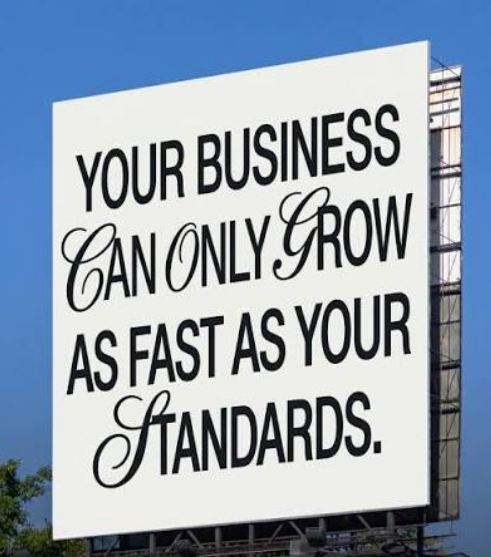
Growth is exciting.
Revenue increases. New customers arrive. Additional markets open. Teams expand.
From the outside, success appears obvious.
Inside the organization, however, a different reality may be emerging.
As growth accelerates, complexity accelerates with it.
And if the underlying structure of the organization does not evolve at the same pace, growth itself can become the source of future problems.
This is one of the great paradoxes of expansion:
The faster an organization grows without structure, the faster that growth eventually stalls.
The Early Success Trap
Most organizations begin growth with a high degree of flexibility.
Leaders are close to operations.
Communication is direct.
Decisions happen quickly.
Problems are resolved through individual effort.
In the early stages, this agility feels like a competitive advantage.
Often, it is.
The challenge is that what works at one level of scale rarely works at the next.
As markets, customers, employees, and partners increase, informal systems begin to break down.
Yet many organizations continue relying on them long after complexity has outgrown them.
Growth Creates Complexity
Every expansion initiative introduces additional demands.
New markets require new reporting.
New customers create new service requirements.
New partnerships increase coordination needs.
New employees require clearer accountability.
The result is not simply more activity.
It is more complexity.
Organizations that fail to recognize this distinction often assume growth alone will solve their problems.
Instead, growth amplifies them.
Weaknesses that were manageable at a smaller scale become significant obstacles at a larger one.
Three Signs Structure Is Falling Behind Growth
1. Decisions Take Longer
One of the earliest warning signs is slower decision-making.
Questions that were once resolved quickly begin moving through multiple levels of approval.
Leaders become bottlenecks.
Teams wait for direction.
Opportunities are missed.
The issue is rarely competence.
It is usually unclear decision rights.
2. Visibility Begins to Decline
As organizations grow, many generate more reports than ever before.
Yet leadership often feels less informed.
Different markets report different metrics.
Data arrives late.
Performance becomes harder to compare.
More information does not necessarily create more visibility.
Without standardized systems, growth can actually reduce clarity.
3. Coordination Becomes Harder
Teams begin duplicating work.
Functions become misaligned.
Local adaptations create inconsistencies.
What once felt collaborative begins to feel fragmented.
Coordination costs rise because the organization lacks the structure required to support scale.
Why Structure Is Often Misunderstood
Many leaders hear the word “structure” and think “bureaucracy.”
That is a mistake.
Effective structure is not about creating more rules.
It is about creating clarity.
Clarity around:
- Decision rights
- Accountability
- Reporting
- Governance
- Escalation pathways
Good structure reduces friction.
Poor structure creates it.
The organizations that scale successfully understand that structure is not the enemy of growth.
It is the enabler of growth.
The Leadership Imperative
A useful question for executives and boards is:
If our revenue doubled next year, would our operating model become stronger—or more strained?
The answer often reveals whether growth is being supported by scalable systems or by heroic effort.
Organizations cannot rely indefinitely on individual intervention, informal communication, and organizational improvisation.
Eventually, scale requires design.
The Bottom Line
Growth is not proof of scalability.
Many organizations grow successfully for a period while structural weaknesses quietly accumulate beneath the surface.
The challenge is not creating momentum.
The challenge is sustaining it.
The organizations that thrive internationally understand a simple reality:
Markets create growth.
Structure makes growth sustainable.
Because scaling without structure is often the fastest way to stall it.